
Energy Storage Substation Overview
Energy Storage Substation is configured for BESS voltage conversion and grid connection with coordinated transformer, switchgear, protection, auxiliaries, and control.
For Energy Storage Substation, the approved single-line diagram and data sheet convert BESS voltage conversion and grid connection with coordinated transformer, switchgear, protection, auxiliaries, and control into defined ratings, interfaces, component scope, tests, dimensions, and delivery records.
An energy storage substation is built around bidirectional PCS operation, battery containers, transformer duty, MV switching, protection, and auxiliary power
charge-discharge cycles, overload window, harmonic spectrum, neutral grounding, and fault contribution determine the transformer electrical design
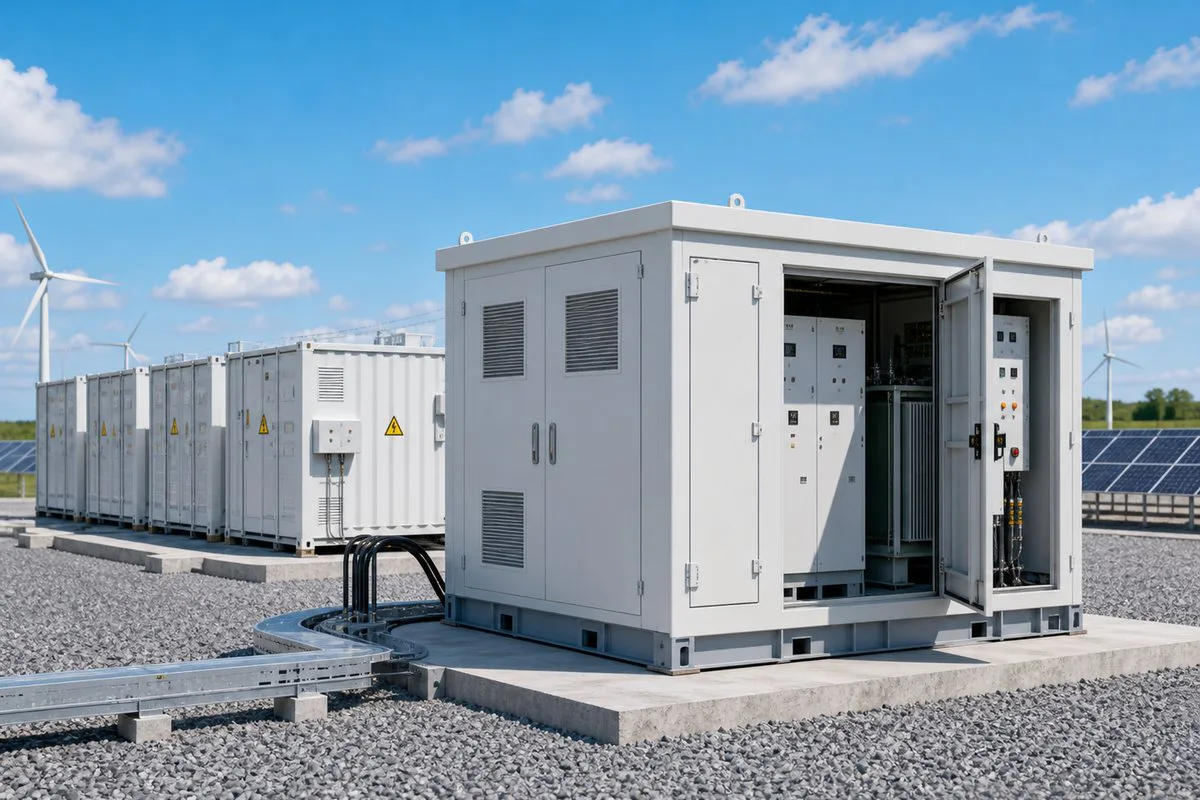

PRODUCT FITEnergy Storage Substation: buyer-specific review points
For real procurement, Energy Storage Substation is judged by its project role, electrical boundary, verification documents, delivery condition, and the buyer's site limits before a factory quotation is compared.
Energy Storage Substation is mainly reviewed for battery energy storage system, solar power plant, wind power plant. BESS voltage conversion and grid connection with coordinated transformer, switchgear, protection, auxiliaries, and control
The first comparison should keep Published power or capacity: 500-3,150 kVA, Primary / system voltage: 11-33 kV, and Secondary voltage: 0.4-0.69 kV visible so quotations remain technically comparable.
Energy Storage Substation is configured for BESS voltage conversion and grid connection with coordinated transformer, switchgear, protection, auxiliaries, and control. Confirm System arrangement: MV switchgear, transformer, LV distribution, protection, control, and enclosure and Monitoring and communication: RS485 / Modbus-class interface; final map confirmed before the data sheet is released.
For Energy Storage Substation, request documents such as Approved data sheet for Energy Storage Substation, General arrangement drawing for Energy Storage Substation, Single-line and schematic diagrams for Energy Storage Substation, Interface and terminal drawings for Energy Storage Substation, Bill of materials or component schedule for Energy Storage Substation. These files should match the ordered voltage class, rating, accessories, test plan, and nameplate.
Energy Storage Substation engineering focus
An energy storage substation is built around bidirectional PCS operation, battery containers, transformer duty, MV switching, protection, and auxiliary power
charge-discharge cycles, overload window, harmonic spectrum, neutral grounding, and fault contribution determine the transformer electrical design
EMS, PCS, protection relay, metering, fire alarm, HVAC auxiliary loads, and SCADA points must be coordinated before production
enclosure zoning, cable entry, ventilation path, DC fire separation, grounding grid, and maintenance clearance are reviewed with the BESS layout
the quotation separates transformer, MV switchgear, auxiliary transformer, control cabinet, communication gateway, spare parts, and commissioning tests
FAT includes ratio, losses, insulation, switching logic, interlock signals, alarm mapping, metering accuracy, and communication simulation
site documents should show one-line diagram, GA drawing, cable schedule, terminal list, protection settings, packing list, and lifting plan
the final supply boundary is confirmed against grid-support modes such as peak shaving, frequency response, standby, or renewable smoothing.
Energy Storage SubstationApplications
Energy Storage Substation is selected for battery energy storage system. An energy storage substation is built around bidirectional PCS operation, battery containers, transformer duty, MV switching, protection, and auxiliary power The project review confirms Published power or capacity: 500-3,150 kVA and Secondary voltage: 0.4-0.69 kV against the actual system and site.
Energy Storage Substation is selected for solar power plant. charge-discharge cycles, overload window, harmonic spectrum, neutral grounding, and fault contribution determine the transformer electrical design The project review confirms Primary / system voltage: 11-33 kV and System arrangement: MV switchgear, transformer, LV distribution, protection, control, and enclosure against the actual system and site.
Energy Storage Substation is selected for wind power plant. EMS, PCS, protection relay, metering, fire alarm, HVAC auxiliary loads, and SCADA points must be coordinated before production The project review confirms Secondary voltage: 0.4-0.69 kV and Monitoring and communication: RS485 / Modbus-class interface; final map confirmed against the actual system and site.
Energy Storage SubstationPublished technical reference
| Published power or capacity | 500-3,150 kVA |
|---|---|
| Primary / system voltage | 11-33 kV |
| Secondary voltage | 0.4-0.69 kV |
| System arrangement | MV switchgear, transformer, LV distribution, protection, control, and enclosure |
| Monitoring and communication | RS485 / Modbus-class interface; final map confirmed |
| Enclosure and protection | Outdoor enclosure selected for site and corrosion conditions |
| Primary application | battery energy storage system |
| Design and test basis | Energy Storage Substation design and tests set by the project standard and destination |
For Energy Storage Substation, Published power or capacity is referenced as 500-3,150 kVA. An energy storage substation is built around bidirectional PCS operation, battery containers, transformer duty, MV switching, protection, and auxiliary power The ordered value is fixed in the approved data sheet for the selected application.
For Energy Storage Substation, Primary / system voltage is referenced as 11-33 kV. charge-discharge cycles, overload window, harmonic spectrum, neutral grounding, and fault contribution determine the transformer electrical design The ordered value is fixed in the approved data sheet for the selected application.
For Energy Storage Substation, Secondary voltage is referenced as 0.4-0.69 kV. EMS, PCS, protection relay, metering, fire alarm, HVAC auxiliary loads, and SCADA points must be coordinated before production The ordered value is fixed in the approved data sheet for the selected application.
Energy Storage Substation: BESS voltage conversion and grid connection with coordinated transformer, switchgear, protection, auxiliaries, and control. Published values identify catalog platforms or reference configurations. Final ratings, component brands, withstand levels, dimensions, losses, temperatures, protocols, and guarantees follow the approved project data sheet.
Energy Storage SubstationConfiguration priorities
For Energy Storage Substation, evaluate this decision against BESS voltage conversion and grid connection with coordinated transformer, switchgear, protection, auxiliaries, and control, Published power or capacity: 500-3,150 kVA, and the battery energy storage system operating duty. An energy storage substation is built around bidirectional PCS operation, battery containers, transformer duty, MV switching, protection, and auxiliary power
For Energy Storage Substation, evaluate this decision against BESS voltage conversion and grid connection with coordinated transformer, switchgear, protection, auxiliaries, and control, Primary / system voltage: 11-33 kV, and the solar power plant operating duty. charge-discharge cycles, overload window, harmonic spectrum, neutral grounding, and fault contribution determine the transformer electrical design
For Energy Storage Substation, evaluate this decision against BESS voltage conversion and grid connection with coordinated transformer, switchgear, protection, auxiliaries, and control, Secondary voltage: 0.4-0.69 kV, and the wind power plant operating duty. EMS, PCS, protection relay, metering, fire alarm, HVAC auxiliary loads, and SCADA points must be coordinated before production
For Energy Storage Substation, evaluate this decision against BESS voltage conversion and grid connection with coordinated transformer, switchgear, protection, auxiliaries, and control, System arrangement: MV switchgear, transformer, LV distribution, protection, control, and enclosure, and the utility grid operating duty. enclosure zoning, cable entry, ventilation path, DC fire separation, grounding grid, and maintenance clearance are reviewed with the BESS layout
Energy Storage SubstationEngineering, assembly, and verification
For Energy Storage Substation, this stage is controlled against BESS voltage conversion and grid connection with coordinated transformer, switchgear, protection, auxiliaries, and control and Primary / system voltage: 11-33 kV. charge-discharge cycles, overload window, harmonic spectrum, neutral grounding, and fault contribution determine the transformer electrical design
For Energy Storage Substation, this stage is controlled against BESS voltage conversion and grid connection with coordinated transformer, switchgear, protection, auxiliaries, and control and Secondary voltage: 0.4-0.69 kV. EMS, PCS, protection relay, metering, fire alarm, HVAC auxiliary loads, and SCADA points must be coordinated before production
For Energy Storage Substation, this stage is controlled against BESS voltage conversion and grid connection with coordinated transformer, switchgear, protection, auxiliaries, and control and System arrangement: MV switchgear, transformer, LV distribution, protection, control, and enclosure. enclosure zoning, cable entry, ventilation path, DC fire separation, grounding grid, and maintenance clearance are reviewed with the BESS layout
Energy Storage SubstationIntegrated FAT and acceptance
Energy Storage Substation acceptance is planned around BESS voltage conversion and grid connection with coordinated transformer, switchgear, protection, auxiliaries, and control and Published power or capacity: 500-3,150 kVA, Primary / system voltage: 11-33 kV, Secondary voltage: 0.4-0.69 kV, System arrangement: MV switchgear, transformer, LV distribution, protection, control, and enclosure. Each test is tied to the ordered unit, nameplate data, and approved technical schedule.
Energy Storage Substation delivery preparation carries Secondary voltage: 0.4-0.69 kV, System arrangement: MV switchgear, transformer, LV distribution, protection, control, and enclosure, Monitoring and communication: RS485 / Modbus-class interface; final map confirmed, Enclosure and protection: Outdoor enclosure selected for site and corrosion conditions into the approved drawing, accessory schedule, packing method, handling limits, and site interfaces.
Monitoring and communication: RS485 / Modbus-class interface; final map confirmed. Freeze the single-line diagram, equipment schedule, plan and elevation, foundation, cable entry, earthing, communication, and auxiliary-power interfaces.
Enclosure and protection: Outdoor enclosure selected for site and corrosion conditions. Verify component models, wiring, interlocks, labels, test records, enclosure finish, loose parts, keys, tools, and document package.
Primary application: battery energy storage system. Confirm section splits, lifting frames, transport bracing, moisture protection, loading plan, unloading space, installation sequence, and site connection scope.
Energy Storage SubstationProject technical documents
Energy Storage Substation: Project technical documents The document set remains linked to BESS voltage conversion and grid connection with coordinated transformer, switchgear, protection, auxiliaries, and control and the approved product configuration. The final configuration is confirmed against the single-line diagram, load or duty profile, site conditions, applicable standard, interface drawings, testing plan, and document schedule.
FAT documentation and witness plan
For Energy Storage Substation, when FAT is required, the inspection scope, witness points, acceptance criteria and report package are confirmed against the approved specification before testing. The agreed plan follows BESS voltage conversion and grid connection with coordinated transformer, switchgear, protection, auxiliaries, and control.
Review the FAT process ↗Energy Storage SubstationProject Configuration Checkpoints
Energy Storage Substation · Electrical boundary
Published power or capacity: 500-3,150 kVA and Primary / system voltage: 11-33 kV define the first comparison basis for Energy Storage Substation.
Energy Storage Substation · Engineering focus
An energy storage substation is built around bidirectional PCS operation, battery containers, transformer duty, MV switching, protection, and auxiliary power System arrangement: MV switchgear, transformer, LV distribution, protection, control, and enclosure and Monitoring and communication: RS485 / Modbus-class interface; final map confirmed should be checked before drawing approval.
Energy Storage Substation · Acceptance files
Approved data sheet for Energy Storage Substation, General arrangement drawing for Energy Storage Substation, Single-line and schematic diagrams for Energy Storage Substation, Interface and terminal drawings for Energy Storage Substation must match the ordered model, rating, accessories, and test plan.
Energy Storage SubstationTechnical FAQs
These Energy Storage Substation questions cover Published power or capacity: 500-3,150 kVA, Primary / system voltage: 11-33 kV, site duty, and Approved data sheet for Energy Storage Substation, General arrangement drawing for Energy Storage Substation so buyers can judge model fit before sending an RFQ.
01What technical range is published for Energy Storage Substation?
Energy Storage Substation: Published power or capacity: 500-3,150 kVA; Primary / system voltage: 11-33 kV; Secondary voltage: 0.4-0.69 kV; System arrangement: MV switchgear, transformer, LV distribution, protection, control, and enclosure. An energy storage substation is built around bidirectional PCS operation, battery containers, transformer duty, MV switching, protection, and auxiliary power
02How is Energy Storage Substation configured for a project?
Energy Storage Substation: charge-discharge cycles, overload window, harmonic spectrum, neutral grounding, and fault contribution determine the transformer electrical design Monitoring and communication: RS485 / Modbus-class interface; final map confirmed; Enclosure and protection: Outdoor enclosure selected for site and corrosion conditions; Primary application: battery energy storage system.
03Which documents accompany Energy Storage Substation?
Energy Storage Substation documents should identify Primary / system voltage: 11-33 kV; Secondary voltage: 0.4-0.69 kV; System arrangement: MV switchgear, transformer, LV distribution, protection, control, and enclosure; Monitoring and communication: RS485 / Modbus-class interface; final map confirmed and include Approved data sheet, General arrangement drawing, Single-line and schematic diagrams, Interface and terminal drawings for the ordered unit.
04What should be sent for a Energy Storage Substation quotation?
Energy Storage Substation: enclosure zoning, cable entry, ventilation path, DC fire separation, grounding grid, and maintenance clearance are reviewed with the BESS layout Send Published power or capacity: 500-3,150 kVA; Primary / system voltage: 11-33 kV; Secondary voltage: 0.4-0.69 kV; System arrangement: MV switchgear, transformer, LV distribution, protection, control, and enclosure, quantity, destination, site conditions, drawings, inspection needs, and target delivery date.
Energy Storage Substation Project Enquiry
Energy Storage Substation: Capacity, voltage, quantity, application, destination, site conditions, standard, drawings, and schedule are the main project inputs. The confirmed technical scope forms the basis for engineering response, drawings, testing, quotation, and delivery planning.