
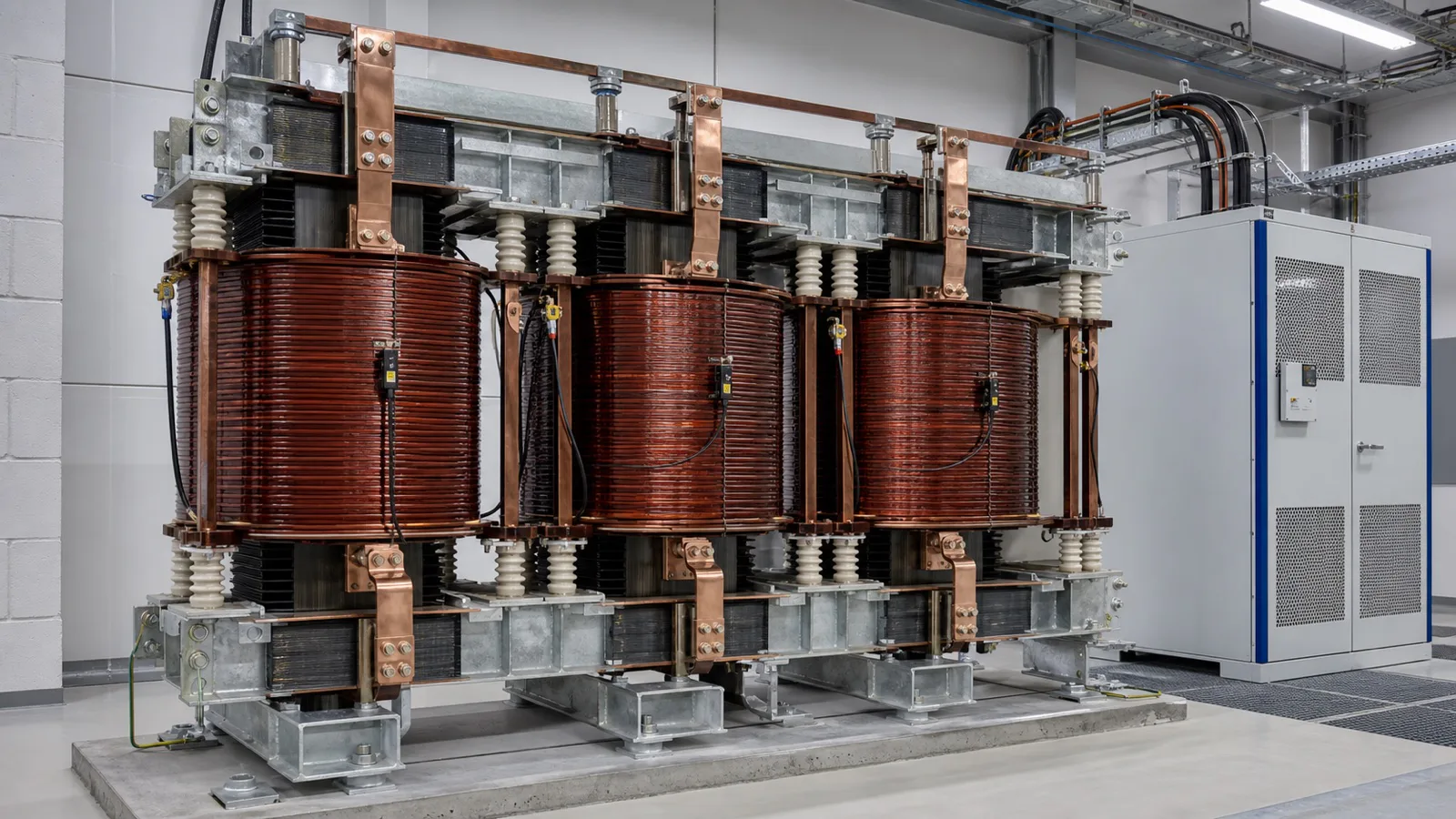
Power Reactor Overview
Power Reactor is configured for current limiting, filtering, reactive compensation, starting, smoothing, or power-quality duty defined by the network study.
For Power Reactor, the approved single-line diagram and data sheet convert current limiting, filtering, reactive compensation, starting, smoothing, or power-quality duty defined by the network study into defined ratings, interfaces, component scope, tests, dimensions, and delivery records.
A power reactor is selected from a network study rather than a transformer kVA alone. Current limiting, shunt compensation, series compensation, filtering, motor starting, smoothing, and neutral duty require different electromagnetic designs.
Rated voltage and current, inductance or reactance, tolerance, linearity, harmonic spectrum, short-time current, insulation, losses, magnetic field, noise, temperature rise, and switching duty form the core data sheet.
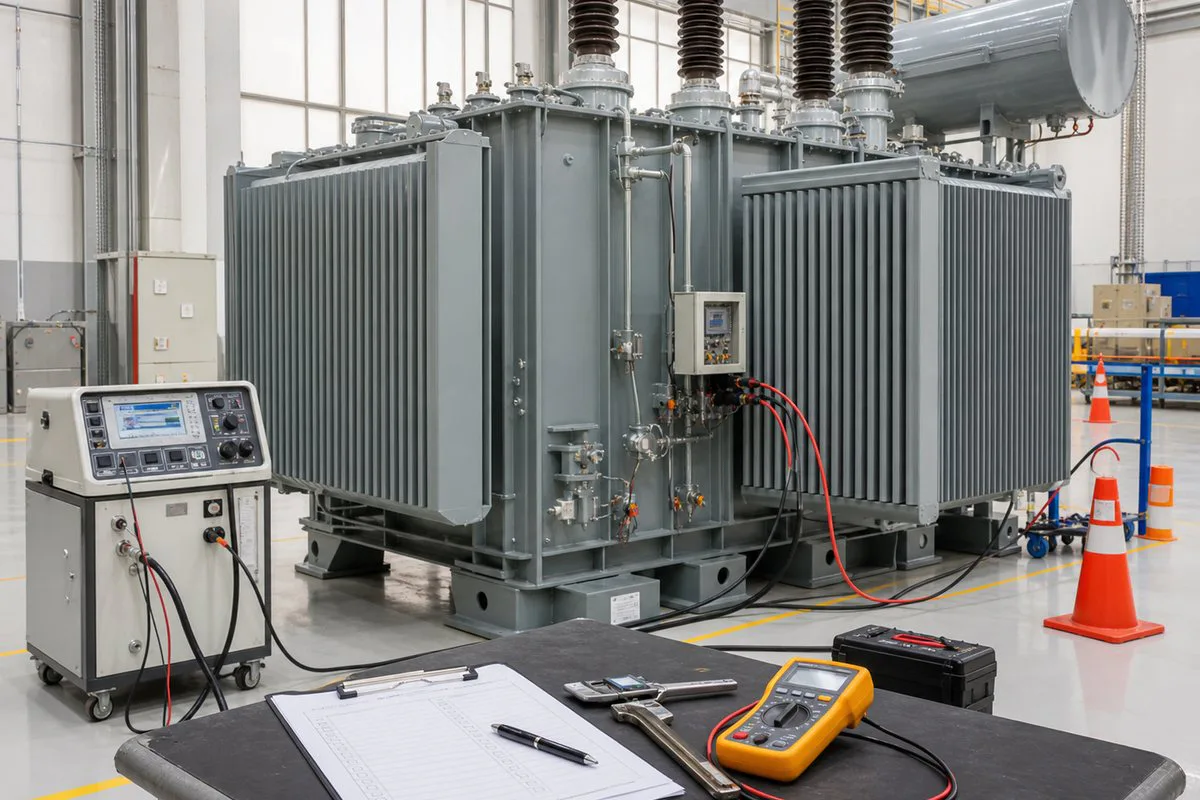

PRODUCT FITPower Reactor: buyer-specific review points
For real procurement, Power Reactor is judged by its project role, electrical boundary, verification documents, delivery condition, and the buyer's site limits before a factory quotation is compared.
Power Reactor is mainly reviewed for utility grid, industrial plant, solar power plant. current limiting, filtering, reactive compensation, starting, smoothing, or power-quality duty defined by the network study
The first comparison should keep Primary / system voltage: Power Reactor primary voltage fixed by the incoming system, Rated current: Power Reactor current rating sized from the feeder schedule, and Primary application: Power Reactor application duty confirmed before design release visible so quotations remain technically comparable.
Power Reactor is configured for current limiting, filtering, reactive compensation, starting, smoothing, or power-quality duty defined by the network study. Confirm Material / construction: air-core or iron-core by duty and Cooling / ventilation: Power Reactor cooling margin set by load cycle and ambient temperature before the data sheet is released.
For Power Reactor, request documents such as Approved data sheet for Power Reactor, General arrangement drawing for Power Reactor, Single-line and schematic diagrams for Power Reactor, Interface and terminal drawings for Power Reactor, Bill of materials or component schedule for Power Reactor. These files should match the ordered voltage class, rating, accessories, test plan, and nameplate.
Power Reactor engineering focus
A power reactor is selected from a network study rather than a transformer kVA alone. Current limiting, shunt compensation, series compensation, filtering, motor starting, smoothing, and neutral duty require different electromagnetic designs.
Rated voltage and current, inductance or reactance, tolerance, linearity, harmonic spectrum, short-time current, insulation, losses, magnetic field, noise, temperature rise, and switching duty form the core data sheet.
Air-core and iron-core constructions differ in saturation behavior, footprint, clearances, structural forces, shielding, foundation loads, cooling, and installation near steelwork or sensitive equipment.
Acceptance can include inductance or reactance measurement, resistance and losses, dielectric tests, temperature performance, vibration or sound, mechanical inspection, terminal checks, and verification against the system-study values.
Power Reactor should be checked against Primary / system voltage: Power Reactor primary voltage fixed by the incoming system, Rated current: Power Reactor current rating sized from the feeder schedule, and utility grid before the factory price is treated as comparable.
The quotation boundary for Power Reactor must keep Cooling / ventilation: Power Reactor cooling margin set by load cycle and ambient temperature, Design and test basis: Power Reactor design and tests set by the project standard and destination, accessories, packing, and commissioning support visible to the buyer.
For Power Reactor, the document package should connect Primary / system voltage: Power Reactor primary voltage fixed by the incoming system, Rated current: Power Reactor current rating sized from the feeder schedule, the nameplate, routine-test report, and approved drawing revision.
Power Reactor delivery planning should review transport size, lifting points, cable direction, site access, storage condition, and destination-specific documents.
Power ReactorApplications
Power Reactor is selected for utility grid. A power reactor is selected from a network study rather than a transformer kVA alone. Current limiting, shunt compensation, series compensation, filtering, motor starting, smoothing, and neutral duty require different electromagnetic designs. The project review confirms Primary / system voltage: Power Reactor primary voltage fixed by the incoming system and Primary application: Power Reactor application duty confirmed before design release against the actual system and site.
Power Reactor is selected for industrial plant. Rated voltage and current, inductance or reactance, tolerance, linearity, harmonic spectrum, short-time current, insulation, losses, magnetic field, noise, temperature rise, and switching duty form the core data sheet. The project review confirms Rated current: Power Reactor current rating sized from the feeder schedule and Material / construction: air-core or iron-core by duty against the actual system and site.
Power Reactor is selected for solar power plant. Air-core and iron-core constructions differ in saturation behavior, footprint, clearances, structural forces, shielding, foundation loads, cooling, and installation near steelwork or sensitive equipment. The project review confirms Primary application: Power Reactor application duty confirmed before design release and Cooling / ventilation: Power Reactor cooling margin set by load cycle and ambient temperature against the actual system and site.
Power ReactorPublished technical reference
| Primary / system voltage | Power Reactor primary voltage fixed by the incoming system |
|---|---|
| Rated current | Power Reactor current rating sized from the feeder schedule |
| Primary application | Power Reactor application duty confirmed before design release |
| Material / construction | air-core or iron-core by duty |
| Cooling / ventilation | Power Reactor cooling margin set by load cycle and ambient temperature |
| Design and test basis | Power Reactor design and tests set by the project standard and destination |
For Power Reactor, Primary / system voltage is referenced as Power Reactor primary voltage fixed by the incoming system. Rated voltage and current, inductance or reactance, tolerance, linearity, harmonic spectrum, short-time current, insulation, losses, magnetic field, noise, temperature rise, and switching duty form the core data sheet. The ordered value is fixed in the approved data sheet for the selected application.
For Power Reactor, Rated current is referenced as Power Reactor current rating sized from the feeder schedule. Air-core and iron-core constructions differ in saturation behavior, footprint, clearances, structural forces, shielding, foundation loads, cooling, and installation near steelwork or sensitive equipment. The ordered value is fixed in the approved data sheet for the selected application.
For Power Reactor, Primary application is referenced as Power Reactor application duty confirmed before design release. Power Reactor delivery planning should review transport size, lifting points, cable direction, site access, storage condition, and destination-specific documents. The ordered value is fixed in the approved data sheet for the selected application.
Power Reactor: current limiting, filtering, reactive compensation, starting, smoothing, or power-quality duty defined by the network study. Published values identify catalog platforms or reference configurations. Final ratings, component brands, withstand levels, dimensions, losses, temperatures, protocols, and guarantees follow the approved project data sheet.
Power ReactorConfiguration priorities
For Power Reactor, evaluate this decision against current limiting, filtering, reactive compensation, starting, smoothing, or power-quality duty defined by the network study, Primary / system voltage: Power Reactor primary voltage fixed by the incoming system, and the utility grid operating duty. A power reactor is selected from a network study rather than a transformer kVA alone. Current limiting, shunt compensation, series compensation, filtering, motor starting, smoothing, and neutral duty require different electromagnetic designs.
For Power Reactor, evaluate this decision against current limiting, filtering, reactive compensation, starting, smoothing, or power-quality duty defined by the network study, Rated current: Power Reactor current rating sized from the feeder schedule, and the industrial plant operating duty. Rated voltage and current, inductance or reactance, tolerance, linearity, harmonic spectrum, short-time current, insulation, losses, magnetic field, noise, temperature rise, and switching duty form the core data sheet.
For Power Reactor, evaluate this decision against current limiting, filtering, reactive compensation, starting, smoothing, or power-quality duty defined by the network study, Primary application: Power Reactor application duty confirmed before design release, and the solar power plant operating duty. Air-core and iron-core constructions differ in saturation behavior, footprint, clearances, structural forces, shielding, foundation loads, cooling, and installation near steelwork or sensitive equipment.
For Power Reactor, evaluate this decision against current limiting, filtering, reactive compensation, starting, smoothing, or power-quality duty defined by the network study, Material / construction: air-core or iron-core by duty, and the utility grid operating duty. Acceptance can include inductance or reactance measurement, resistance and losses, dielectric tests, temperature performance, vibration or sound, mechanical inspection, terminal checks, and verification against the system-study values.
Power ReactorEngineering, assembly, and verification
For Power Reactor, this stage is controlled against current limiting, filtering, reactive compensation, starting, smoothing, or power-quality duty defined by the network study and Rated current: Power Reactor current rating sized from the feeder schedule. Rated voltage and current, inductance or reactance, tolerance, linearity, harmonic spectrum, short-time current, insulation, losses, magnetic field, noise, temperature rise, and switching duty form the core data sheet.
For Power Reactor, this stage is controlled against current limiting, filtering, reactive compensation, starting, smoothing, or power-quality duty defined by the network study and Primary application: Power Reactor application duty confirmed before design release. Air-core and iron-core constructions differ in saturation behavior, footprint, clearances, structural forces, shielding, foundation loads, cooling, and installation near steelwork or sensitive equipment.
For Power Reactor, this stage is controlled against current limiting, filtering, reactive compensation, starting, smoothing, or power-quality duty defined by the network study and Material / construction: air-core or iron-core by duty. Acceptance can include inductance or reactance measurement, resistance and losses, dielectric tests, temperature performance, vibration or sound, mechanical inspection, terminal checks, and verification against the system-study values.
Power ReactorDuty-specific testing and acceptance
Power Reactor acceptance is planned around current limiting, filtering, reactive compensation, starting, smoothing, or power-quality duty defined by the network study and Primary / system voltage: Power Reactor primary voltage fixed by the incoming system, Rated current: Power Reactor current rating sized from the feeder schedule, Primary application: Power Reactor application duty confirmed before design release, Material / construction: air-core or iron-core by duty. Each test is tied to the ordered unit, nameplate data, and approved technical schedule.
Power Reactor delivery preparation carries Primary application: Power Reactor application duty confirmed before design release, Material / construction: air-core or iron-core by duty, Cooling / ventilation: Power Reactor cooling margin set by load cycle and ambient temperature, Design and test basis: Power Reactor design and tests set by the project standard and destination into the approved drawing, accessory schedule, packing method, handling limits, and site interfaces.
Cooling / ventilation: Power Reactor cooling margin set by load cycle and ambient temperature. Approve the duty data sheet, system diagram, load or converter data, interface drawings, protection logic, tests, and document register.
Design and test basis: Power Reactor design and tests set by the project standard and destination. Verify ordered configuration, test results, terminals, controls, accessories, labels, manuals, loose parts, packing, and inspection records.
Primary / system voltage: Power Reactor primary voltage fixed by the incoming system. Confirm foundations, cable or bus interfaces, cooling services, earthing, access, environmental controls, commissioning sequence, and operating responsibilities.
Power ReactorProject technical documents
Power Reactor: Project technical documents The document set remains linked to current limiting, filtering, reactive compensation, starting, smoothing, or power-quality duty defined by the network study and the approved product configuration. The final configuration is confirmed against the single-line diagram, load or duty profile, site conditions, applicable standard, interface drawings, testing plan, and document schedule.
FAT documentation and witness plan
For Power Reactor, when FAT is required, the inspection scope, witness points, acceptance criteria and report package are confirmed against the approved specification before testing. The agreed plan follows current limiting, filtering, reactive compensation, starting, smoothing, or power-quality duty defined by the network study.
Review the FAT process ↗Power ReactorProject Configuration Checkpoints
Power Reactor · Electrical boundary
Primary / system voltage: Power Reactor primary voltage fixed by the incoming system and Rated current: Power Reactor current rating sized from the feeder schedule define the first comparison basis for Power Reactor.
Power Reactor · Engineering focus
A power reactor is selected from a network study rather than a transformer kVA alone. Current limiting, shunt compensation, series compensation, filtering, motor starting, smoothing, and neutral duty require different electromagnetic designs. Material / construction: air-core or iron-core by duty and Cooling / ventilation: Power Reactor cooling margin set by load cycle and ambient temperature should be checked before drawing approval.
Power Reactor · Acceptance files
Approved data sheet for Power Reactor, General arrangement drawing for Power Reactor, Single-line and schematic diagrams for Power Reactor, Interface and terminal drawings for Power Reactor must match the ordered model, rating, accessories, and test plan.
Power ReactorTechnical FAQs
These Power Reactor questions cover Primary / system voltage: Power Reactor primary voltage fixed by the incoming system, Rated current: Power Reactor current rating sized from the feeder schedule, site duty, and Approved data sheet for Power Reactor, General arrangement drawing for Power Reactor so buyers can judge model fit before sending an RFQ.
01What technical range is published for Power Reactor?
Power Reactor: Primary / system voltage: Power Reactor primary voltage fixed by the incoming system; Rated current: Power Reactor current rating sized from the feeder schedule; Primary application: Power Reactor application duty confirmed before design release; Material / construction: air-core or iron-core by duty. A power reactor is selected from a network study rather than a transformer kVA alone. Current limiting, shunt compensation, series compensation, filtering, motor starting, smoothing, and neutral duty require different electromagnetic designs.
02How is Power Reactor configured for a project?
Power Reactor: Rated voltage and current, inductance or reactance, tolerance, linearity, harmonic spectrum, short-time current, insulation, losses, magnetic field, noise, temperature rise, and switching duty form the core data sheet. Cooling / ventilation: Power Reactor cooling margin set by load cycle and ambient temperature; Design and test basis: Power Reactor design and tests set by the project standard and destination.
03Which documents accompany Power Reactor?
Power Reactor documents should identify Rated current: Power Reactor current rating sized from the feeder schedule; Primary application: Power Reactor application duty confirmed before design release; Material / construction: air-core or iron-core by duty; Cooling / ventilation: Power Reactor cooling margin set by load cycle and ambient temperature and include Approved data sheet, General arrangement drawing, Single-line and schematic diagrams, Interface and terminal drawings for the ordered unit.
04What should be sent for a Power Reactor quotation?
Power Reactor: Acceptance can include inductance or reactance measurement, resistance and losses, dielectric tests, temperature performance, vibration or sound, mechanical inspection, terminal checks, and verification against the system-study values. Send Primary / system voltage: Power Reactor primary voltage fixed by the incoming system; Rated current: Power Reactor current rating sized from the feeder schedule; Primary application: Power Reactor application duty confirmed before design release; Material / construction: air-core or iron-core by duty, quantity, destination, site conditions, drawings, inspection needs, and target delivery date.
Power Reactor Project Enquiry
Power Reactor: Capacity, voltage, quantity, application, destination, site conditions, standard, drawings, and schedule are the main project inputs. The confirmed technical scope forms the basis for engineering response, drawings, testing, quotation, and delivery planning.