
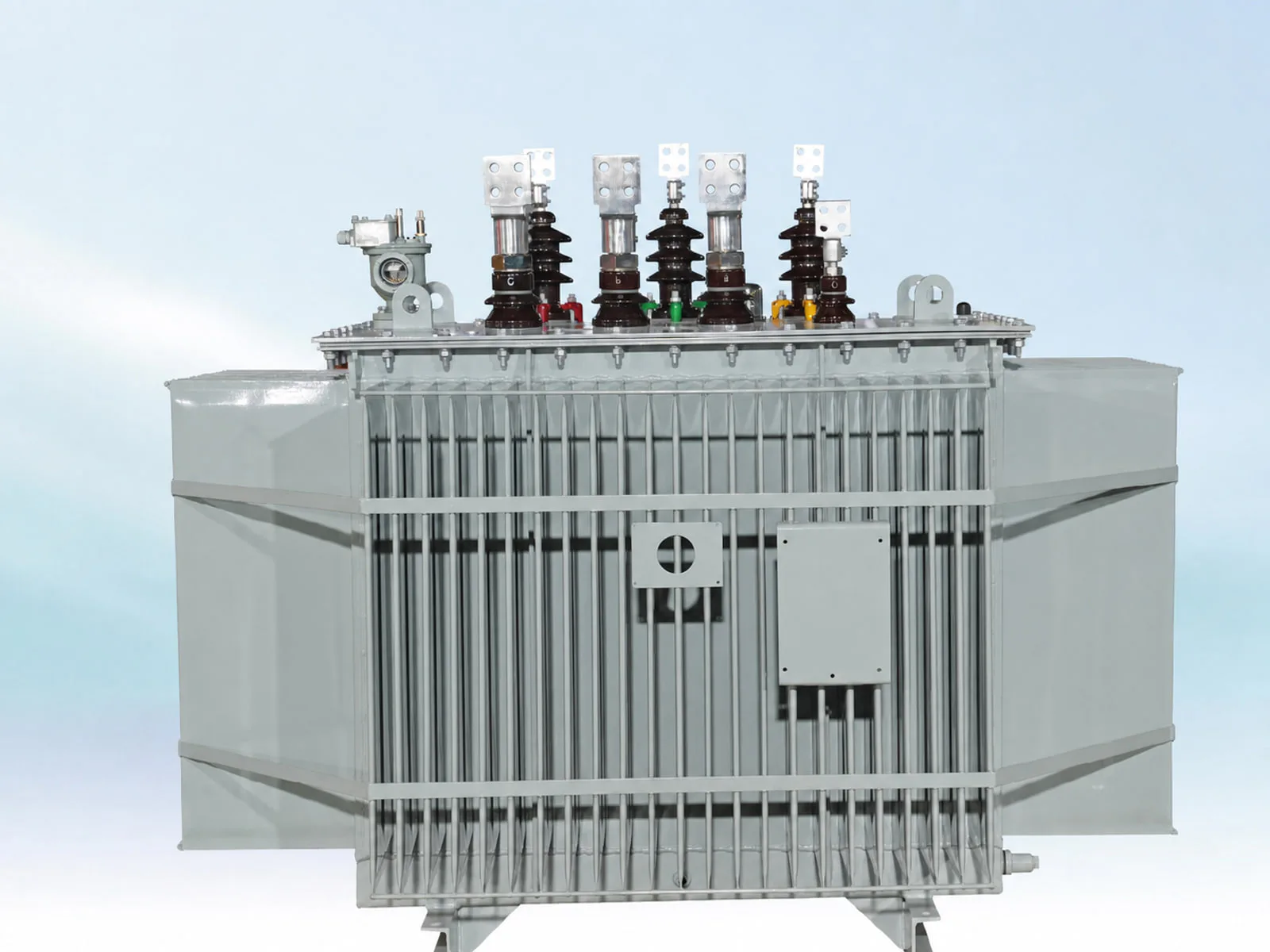
Oil-Immersed Distribution Transformer Range
Designed to step medium-voltage supply down to the utilization voltage required by local grids, factories, commercial facilities, communities, and renewable-energy auxiliary systems.
The standard 10 kV schedule covers S13, S20, and S22 loss-level series from 30 to 2,500 kVA. Projects outside that schedule are reviewed against the required voltage class, guaranteed losses, impedance, temperature rise, accessories, and installation conditions.

Where This Distribution Transformer Is Used
For feeder substations, residential communities, rural grids, and replacement programs requiring a sealed outdoor transformer.
For plant incoming power, workshops, warehouses, mining support, oil and chemical sites, and other continuous-load installations.
For solar or storage auxiliary distribution, transport facilities, commercial developments, and infrastructure power systems.
Published Technical Range
| Product type | Three-phase oil-immersed distribution transformer |
|---|---|
| Published project range | 30-3,000 kVA; rated voltage 10-35 kV |
| Standard 10 kV ratings | 30, 50, 63, 80, 100, 125, 160, 200, 250, 315, 400, 500, 630, 800, 1,000, 1,250, 1,600, 2,000, 2,500 kVA |
| Low-voltage reference | 0.4 kV in the standard 10 kV schedule; 0.4/0.69 kV options appear in the broader oil-transformer range |
| Vector groups shown | Dyn11 / Yzn11 / Yyn0 |
| Cooling | Self-cooled oil-immersed / ONAN for standard distribution duty; other cooling stages are confirmed by rating and thermal design |
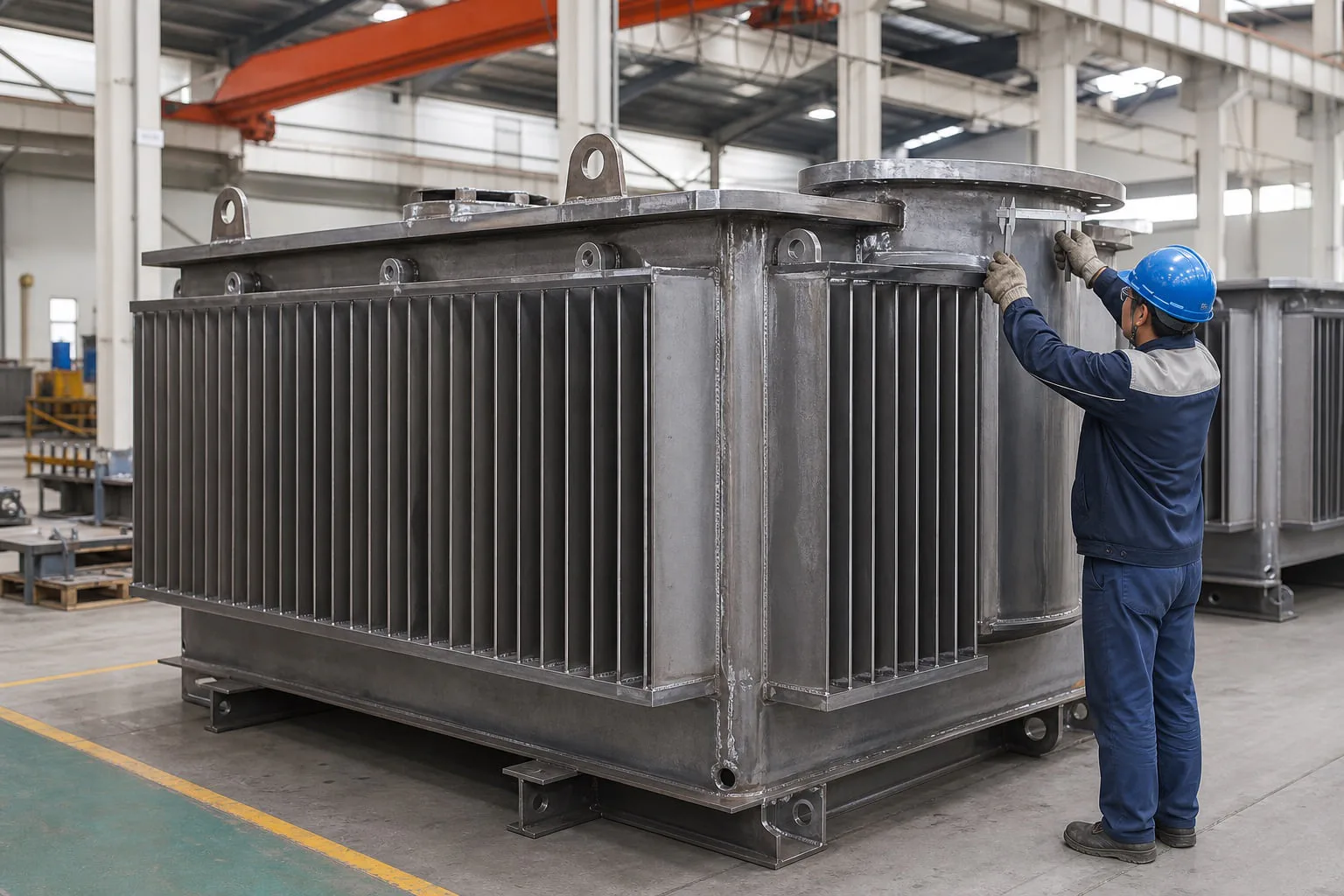
| Tank and oil filling | Hermetically sealed corrugated-tank construction with vacuum-filtered oil filling |
| Conductor options | Copper or aluminum winding according to the agreed loss, temperature-rise, size, and commercial schedule |
| Insulating liquid | Mineral oil as the conventional option; silicone or biodegradable natural/synthetic ester variants by project |
| Design basis | IEC 60076 or the contract/project standard stated in the approved technical schedule |
These values describe the published product-family range. The quotation and approved data sheet define the guaranteed values for a specific transformer.
Choose the Series by Operating Priority
The series name alone is not enough for comparison. Guaranteed no-load loss, load loss, impedance, temperature rise, conductor, accessories, and test scope must appear in the quotation schedule.
| Series / option | Best suited to | Confirm before quotation |
|---|---|---|
| S13 | Conventional low-loss 10 kV distribution projects | Capacity, voltage ratio, loss guarantee, impedance, conductor, taps, and accessories |
| S20 / S22 | Projects prioritizing lower operating losses and lifecycle energy cost | Applicable efficiency requirement and guaranteed loss values at the quoted rating |
| Amorphous-alloy series | Long operating hours and projects where no-load loss has a high cost impact | The domestic product reference states about 60% lower no-load loss than conventional oil designs; use the offered guarantee for evaluation |
| High-overload / natural-ester variants | Peak-load duty, higher fire-safety expectations, renewable sites, and environmentally sensitive locations | Overload curve, insulation system, liquid type, fire point, temperature rise, and maintenance requirements |
Standard Service Conditions
- Reference altitude: not more than 1,000 m.
- Reference ambient limits: maximum +40°C, hottest monthly average +30°C, annual average +20°C, minimum -25°C.
- Higher altitude, exceptional temperature, corrosion, seismic duty, restricted ventilation, harmonic loading, or unusual transport conditions require an adjusted design.
From Approved Data Sheet to Finished Transformer
The order is controlled against one approved technical schedule so that design, materials, testing, nameplate data, and shipment documents remain consistent.
Review the single-line diagram, voltage ratio, capacity, losses, impedance, vector group, taps, accessories, and site conditions.
Select core steel, conductor, insulation, winding structure, clamping, and clearances against the approved electrical design.
Complete tank fabrication, sealing checks, assembly, vacuum treatment, vacuum-filtered oil filling, and accessory installation.
Complete routine tests, nameplate and drawing checks, visual inspection, packing review, and shipment-release documents.
Testing and Acceptance
The routine program is defined by the applicable standard and approved data sheet. Additional type or special tests are quoted only when required by the project.
Project options may include temperature-rise, lightning-impulse, sound-level, partial-discharge, FAT witness, or third-party inspection. The offered scope must state whether the test is performed on the ordered unit or supported by a relevant type-test reference.
Documents Supplied by Project Stage
Document availability is matched to the offered series and rating instead of relying on unrelated certificate claims.
Distribution Transformer FAQs
What capacity and voltage range is available?
The published three-phase distribution range is 30-3,000 kVA and 10-35 kV. The standard 10 kV schedule lists 30-2,500 kVA; final availability depends on the required losses, impedance, accessories, and site conditions.
Can the transformer be customized for local standards?
Yes. Voltage ratio, frequency, vector group, taps, impedance, loss level, conductor, liquid, protection accessories, paint system, and documents are confirmed against the project specification.
Which test documents can be provided?
The document package can include the approved data sheet, GA drawing, nameplate data, routine test report, relevant type-test references, manuals, inspection photos, and packing records.
What information is needed for a firm quotation?
Send capacity, primary and secondary voltage, frequency, quantity, destination, applicable standard, loss requirement, impedance, vector group, installation conditions, accessories, drawings, and required delivery term.
Request a Distribution Transformer Quotation
Send your specification, single-line diagram, load schedule, or existing nameplate. We will return the proposed series, technical exceptions, document scope, testing basis, delivery boundary, and quotation.